Dental Implants vs. Dentures: The Ultimate Guide to Full Mouth Restoration in Turkey
Losing multiple teeth or facing the prospect of total tooth loss can be an overwhelming experience. It affects not just your ability to eat and speak, but your confidence and overall quality of life. For decades, traditional removable dentures were the primary solution for replacing missing teeth. However, advancements in modern dentistry have revolutionized how we approach full mouth restoration, making dental implants—particularly the All-on-4 and All-on-6 techniques—the gold standard.
In this comprehensive guide, we will explore the critical differences between dental implants and traditional dentures. We'll delve into the long-term impacts on your oral health, jawbone structure, and daily lifestyle. Furthermore, we will uncover why tens of thousands of patients worldwide are choosing Turkey for their full-mouth dental implant procedures, achieving world-class results at a fraction of the cost in their home countries.
By the end of this 2500-word deep dive, you will have all the information necessary to make an informed decision about your oral health future.
1. Understanding the Baseline: What Are Traditional Dentures?
Traditional dentures are removable prosthetic devices designed to replace missing teeth and the surrounding tissue. They come in two main types:
- Complete Dentures: Used when all teeth are missing in either the upper or lower jaw. They rest directly on the gums and are typically held in place by suction or dental adhesive.
- Partial Dentures: Used when some natural teeth remain. They often consist of replacement teeth attached to a pink or gum-colored plastic base, usually connected by metal framework that clasps onto the remaining natural teeth.
The Problem with Traditional Dentures
While dentures have historically provided a functional solution for edentulous (toothless) patients, they come with significant, often life-altering drawbacks:
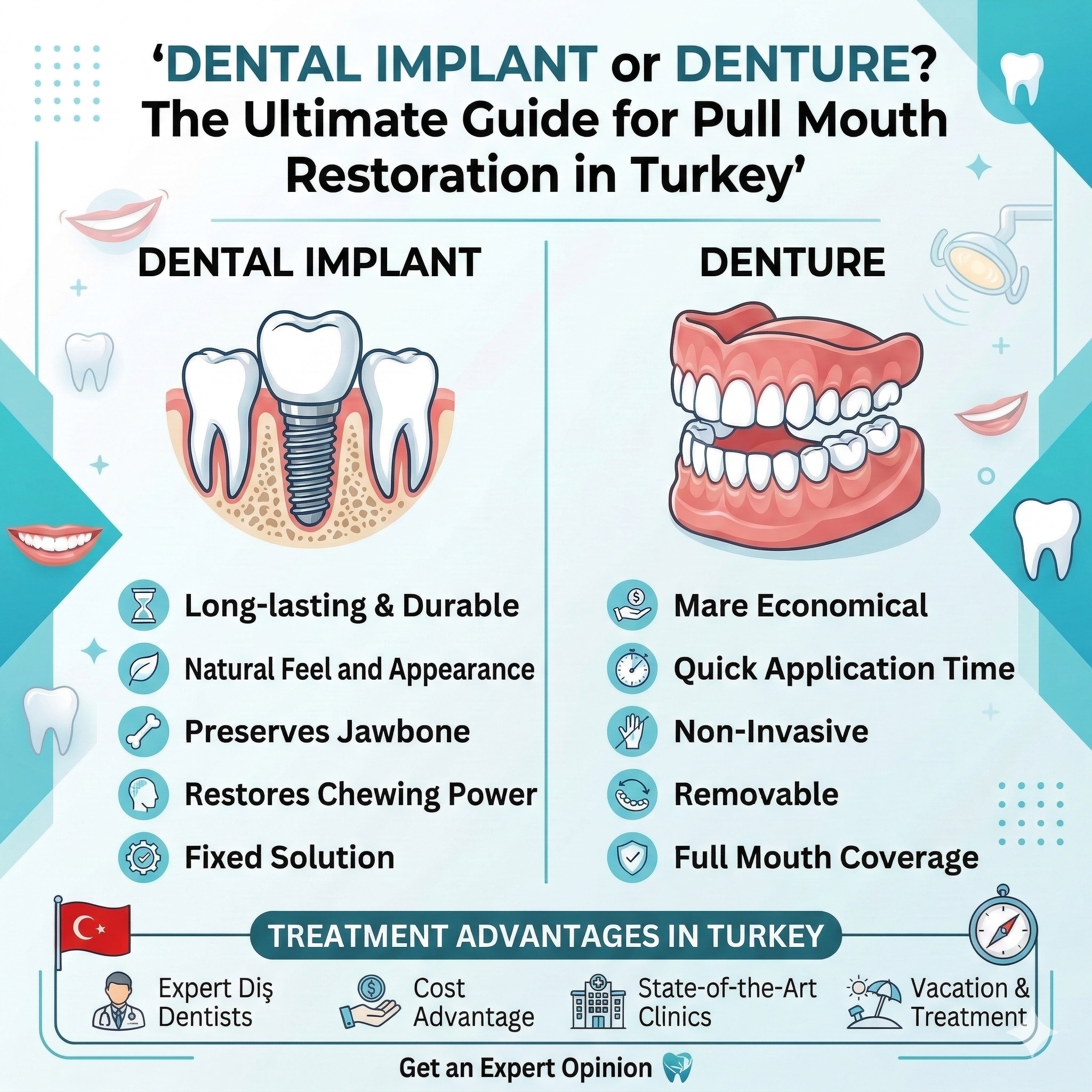
- Instability and Slipping: Because dentures rely on suction or adhesive, they are prone to slipping, clicking, or even falling out while eating, laughing, or speaking. This instability can cause severe social embarrassment and limit the types of foods you can comfortably consume.
- Decreased Biting Force: Denture wearers typically have only 10% to 20% of the biting force of someone with natural teeth. This forces patients to alter their diets, often avoiding hard, crunchy, or chewy foods like apples, steak, and nuts, which can lead to nutritional deficiencies.
- Discomfort and Sore Spots: The constant friction of the acrylic base rubbing against the sensitive gum tissue often results in painful sores and inflammation, requiring frequent adjustments (relines) by a dentist.
- Accelerated Bone Loss (Facial Collapse): This is perhaps the most critical and least understood drawback. Natural tooth roots stimulate the jawbone during chewing, signaling the body to maintain bone density. When teeth are extracted and replaced with dentures, this stimulation ceases. The jawbone begins to resorb (melt away or shrink). Over time, this leads to a condition known as "facial collapse," where the lower third of the face shins and puckers inward, prematurely aging the patient by decades.
2. The Modern Standard: What Are Dental Implants?
A dental implant is a small, screw-shaped surgical fixture, usually made of biocompatible titanium, that is placed directly into the jawbone to serve as a replacement for the root of a missing tooth. Over a period of months, the implant fuses with the natural bone in a process called osseointegration.
Once integrated, the implant provides a rock-solid foundation for attaching a custom-made artificial tooth (crown), a bridge, or even a full arch of teeth.
The Superiority of Dental Implants
Dental implants address every single shortcoming of traditional dentures, offering a permanent, natural-feeling solution:
- Unmatched Stability: Because they are anchored into the bone, implant-supported teeth do not slip, click, or fall out. You can speak confidently and laugh freely without fear of embarrassment.
- Restored Biting Force: Dental implants restore almost 100% of your natural chewing capability. You can return to a normal, healthy diet, eating steaks, crisp fruits, and nuts without hesitation.
- Comfort and Natural Feel: Implants feel and function exactly like natural teeth. There is no bulky acrylic covering the roof of your mouth (which dampens your ability to taste food), and no friction causing sore gums.
- Preservation of Jawbone: This is the most crucial medical advantage. The titanium implant acts as an artificial root, stimulating the jawbone during chewing and completely halting the bone resorption process. Implants actually preserve your facial structure and keep you looking youthful.
- Longevity: With proper oral hygiene and regular dental check-ups, dental implants are designed to last a lifetime. While the crowns or bridges attached to them may need replacement after 10-15 years due to normal wear, the titanium implants themselves rarely fail.
3. Full Mouth Restoration: The All-on-4 and All-on-6 Revolution
If you are missing all your teeth on the upper or lower jaw, you do not need an individual implant for every single missing tooth. Thanks to advanced biomechanics, dentists can now support an entire arch of teeth (10-14 teeth) using just 4 or 6 strategically placed implants.
The All-on-4 Technique
In the All-on-4 method, four implants are placed in the jaw. The two anterior (front) implants are placed straight down, while the two posterior (back) implants are tilted at a 45-degree angle.
Why tilted? Tilting the back implants allows them to bypass the sinus cavities in the upper jaw and the nerve canal in the lower jaw. It also allows the implants to anchor into denser, higher-quality bone further forward in the jaw. This innovative approach often eliminates the need for expensive and time-consuming bone grafting or sinus lift procedures, even for patients who have suffered moderate bone loss from wearing dentures for years.
The All-on-6 Technique
The All-on-6 procedure follows the same principles but utilizes six implants per arch. This provides even greater stability and evenly distributes chewing forces across more points. Our specialists at Master Smile Studio often recommend All-on-6 for patients with sufficient bone volume and heavier biting forces, as it offers the absolute maximum in foundational strength.
The "Teeth in a Day" Advantage
One of the most life-changing aspects of the All-on-4/6 protocols is immediate loading. In most traditional implant scenarios, patients must wait 3-6 months for the implants to fuse with the bone before receiving "teeth." With All-on-4, the implants are placed and a temporary, functional set of fixed teeth is attached on the very same day. You walk into the clinic with failing teeth (or no teeth) and walk out a few hours later with a brand-new, fixed, beautiful smile.
4. Comparing the Long-Term Costs: Implants vs. Dentures
When evaluating the cost, patients often look only at the initial sticker price. Traditional dentures are undoubtedly cheaper upfront. However, analyzing the long-term, lifetime cost reveals a very different picture.
The Hidden Costs of Dentures
- Adhesives and Cleaners: The ongoing daily cost of specialized adhesives and cleaning solutions adds up significantly over years.
- Relines and Adjustments: As your jawbone inevitably shrinks due to lack of stimulation, your dentures will become loose. They require professional "relining" every 1-2 years to fit the new shape of your gums.
- Total Replacements: Dentures undergo significant wear and tear and typically must be completely replaced every 5 to 7 years.
- Health Costs: The inability to chew properly often leads to gastrointestinal issues and nutritional deficiencies, which can incur indirect medical costs and lower your overall quality of life.
The Value of Dental Implants
While the initial investment for dental implants or an All-on-4 procedure is higher, it is generally a one-time investment in your foundation. The implants do not require adhesives, they don't instigate bone loss, and they don't need constant refitting. Over a 10 to 20-year period, the cumulative cost of maintaining traditional dentures often surpasses the one-time cost of dental implants.
Furthermore, it is impossible to put a price tag on the renewed confidence, the ability to eat your favorite foods, and the preservation of your facial structure. Dental implants are not just a dental procedure; they are a profound upgrade to your quality of life.
5. Why Choose Turkey for Your Dental Implants?
If you live in the United Kingdom, Western Europe, or North America, the primary barrier to receiving dental implants is the staggering cost. A full-mouth All-on-4 restoration can easily cost £25,000 to £40,000 per jaw in the UK or USA.
This has led to the exponential rise of dental tourism, with Antalya, Turkey emerging as the premier global destination for high-end dental restorations. Here's why choosing Turkey for your dental treatment is the smartest decision you can make:
1. Cost Savings Between 50% to 70%
In Turkey, you can undergo the exact same procedure—using the exact same globally recognized premium implant brands (such as Nobel Biocare or Straumann)—for a fraction of the cost. The massive price difference is not due to lower quality; it is purely a result of Turkey's significantly lower cost of living, reduced laboratory fees, and favorable exchange rates.
2. World-Class Expertise and Technology
Turkish dental clinics, particularly those specializing in international patients like Master Smile Studio, are equipped with state-of-the-art technology that often surpasses local clinics in the West. We utilize:
- 3D Volumetric Tomography (CBCT): For millimeter-perfect surgical planning and avoiding vital nerves.
- Computer-Aided Surgical Guides: Ensuring implants are placed at the exact optimal angle.
- In-House Premium Laboratories: Allowing for rapid turnaround times and immediate quality control by the dentists themselves.
Our oral and maxillofacial surgeons perform hundreds of complex implant procedures every month, providing them with a level of specialized experience that few general dentists in the West can match.
3. Premium Implant Brands
We never compromise on the foundation of your smile. We exclusively use world-renowned implant brands that have decades of clinical research and international warranties behind them. Whether you need an adjustment or a check-up in your home country years down the line, any dentist worldwide will recognize and know how to work with the systems we place.
4. VIP Treatment and Comfort
At Master Smile Studio, we believe your dental journey should feel like a vacation, not a stressful medical procedure. Our comprehensive packages are designed to remove all logistical stress from your shoulders. We provide:
- VIP airport transfers in luxury vehicles.
- Accommodation in premium 4 or 5-star partner hotels in beautiful Antalya.
- Dedicated patient coordinators who speak your language natively.
- Post-operative care and strict hygiene protocols.
You get to recover while enjoying the beautiful Mediterranean climate and world-famous hospitality of Turkey.
6. The Procedure: What to Expect During Your Dental Implant Journey in Turkey
Many patients feel anxious about traveling abroad for surgery. At Master Smile Studio, we ensure total transparency. Here is the step-by-step process of achieving your new smile.
Step 1: The Online Consultation
Before you even book a flight, our journey begins online. We ask you to send us a recent panoramic X-ray and some photos of your smile. Our surgeons evaluate your bone density, sinus positions, and overall oral health. We then provide a detailed, completely transparent treatment plan outlining the exact procedures, the timeline, and the total cost down to the last penny. There are no hidden surprises.
Step 2: Arrival in Antalya
Upon landing at Antalya Airport, our VIP transfer team greets you and takes you to your hotel to rest.
Step 3: Clinical Examination and 3D Planning (Day 1)
You are brought to our clinic where you meet your surgeon. We take high-resolution 3D CT scans to map out your jawbone exactly. We discuss your aesthetic goals—the shape, shade, and size of your new teeth—using digital smile design software.
Step 4: The Surgery (Day 1 or 2)
The surgery is performed under local anesthesia (or sedation if you prefer, for total comfort). If any remaining failing teeth need extraction, it is done now. The surgeon precisely places the 4 or 6 titanium implants into your jawbone. Thanks to our 3D surgical guides, the procedure is remarkably fast and minimally invasive.
Impressions of your newly placed implants are taken immediately.
Step 5: Placement of Temporary Fixed Teeth (Day 2 or 3)
Within 24 to 48 hours of surgery, our in-house laboratory creates your temporary, fixed acrylic teeth. These are securely screwed onto your new implants. You leave the clinic with a beautiful, fixed smile. You will stay in Antalya for a few more days for final check-ups to ensure healing is progressing perfectly.
Step 6: The Healing Phase (3-6 Months)
You return to your home country. Over the next 3 to 6 months, the titanium implants undergo osseointegration, fusing permanently with your jawbone. During this time, you wear your temporary fixed teeth and consume a softer diet while the bone heals.
Step 7: The Final Restoration
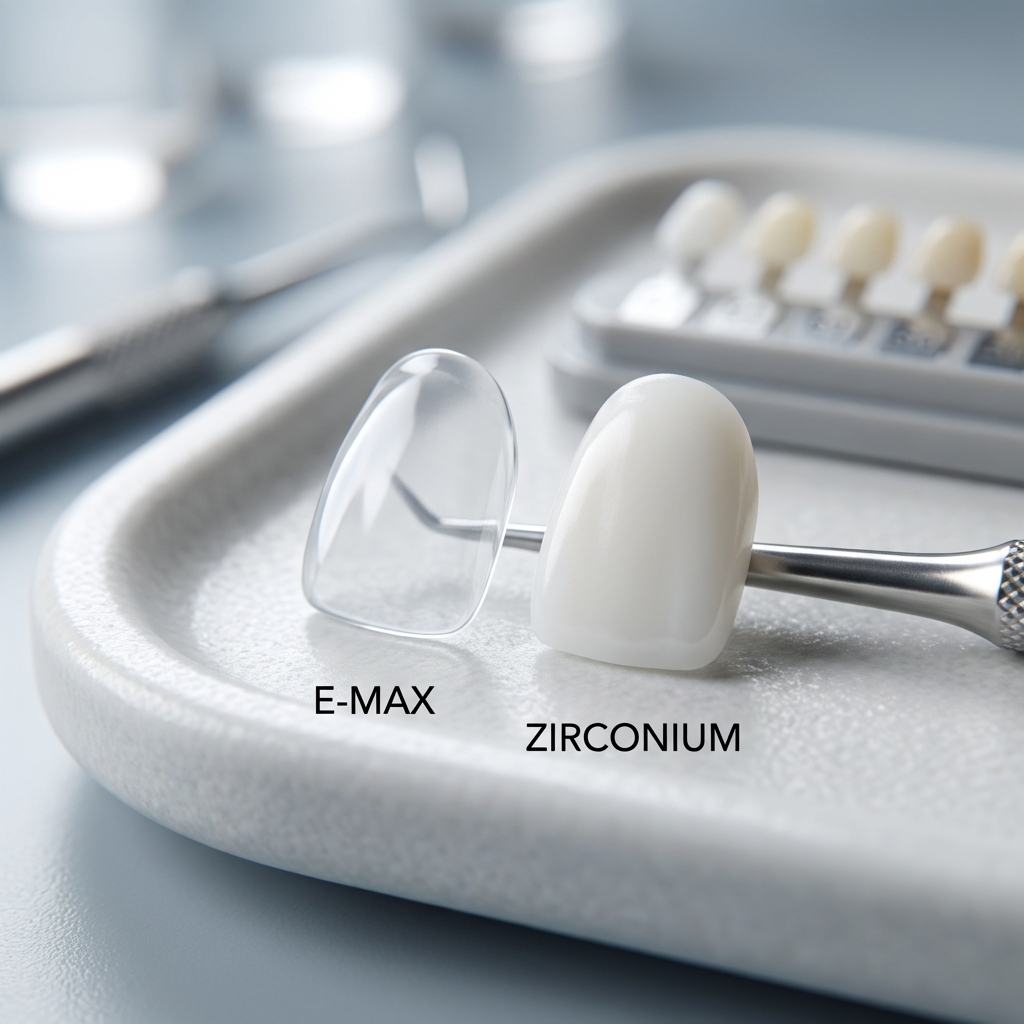
After the healing period, you return to Antalya for a shorter visit (usually 5-7 days). We take final impressions and our ceramic artists craft your permanent, hyper-realistic Zirconia or Porcelain fixed bridge. This bridge is incredibly strong, stain-resistant, and aesthetically flawless. It is attached to your implants, and your full mouth restoration is complete.
7. Overcoming Implant Obstacles: Bone Grafting and Sinus Lifts
Some patients have been told by local dentists that they are "not candidates" for dental implants due to severe bone loss. While bone loss is a serious challenge, it is rarely an insurmountable one for experienced maxillofacial surgeons.
If your jawbone lacks the height or density to support an implant, we utilize advanced bone grafting procedures.
- Bone Grafting: We place biocompatible bone graft material into the deficient area. Over several months, your body regenerates its own natural bone around this material, building a solid foundation.
- Sinus Lifts: In the upper jaw, if bone loss has occurred, the sinus cavity may drop down, leaving insufficient bone height for an implant. A sinus lift is a procedure where the sinus membrane is gently pushed upward, and bone graft material is placed beneath it to create enough vertical height for implants.
Furthermore, as mentioned earlier, the All-on-4 technique often bypasses the need for these procedures entirely by utilizing dense bone in the front of the jaw and angling the posterior implants. During your free online consultation, our experts will analyze your X-ray to determine exactly what protocols you require.
8. Life After Dental Implants: Maintenance and Aftercare
Caring for your new implant-supported teeth is remarkably similar to caring for natural teeth, but with a few special considerations to ensure they last a lifetime.
- Impeccable Oral Hygiene: Just like natural teeth, implants require brushing twice a day. However, since they are a connected bridge, you cannot use traditional floss between the teeth.
- Water Flossers are Essential: A high-quality water flosser (like a Waterpik) is the most critical tool for an implant patient. It uses a pressurized stream of water to flush out food particles and plaque from beneath the bridge and around the implant posts, preventing peri-implantitis (gum disease around the implant).
- Specialized Floss: Superfloss or interdental brushes can also be used to clean underneath the prosthetic bridge.
- Regular Check-ups: Even though your new teeth cannot get cavities, your gums still need monitoring. You should visit a local dental hygienist every 6 months for professional cleaning and to ensure the gum tissue around the implants remains perfectly healthy.
- Night Guards: If you have a history of bruxism (teeth grinding or clenching), we strongly recommend wearing a custom night guard. While the implants are incredibly strong, extreme grinding forces can chip the aesthetic porcelain or zirconia crowning the implants over time.
9. Conclusion: Making the Investment in Yourself
Choosing between traditional dentures and dental implants is not just a financial decision; it is a decision about how you want to live the next decades of your life.
Dentures are a compromise—a temporary fix that accelerates bone loss, limits your diet, and often undermines your confidence. Dental implants represent a total restoration of form and function. They halt facial aging, allow you to eat a steak with confidence, and give you back the smile you thought you had lost forever.
By choosing specialized clinics in Turkey like Master Smile Studio, the prohibitive cost barriers of the West are removed. You can access world-class surgeons, premium materials, and life-changing technology while enjoying the beautiful Turkish Riviera.
Stop letting missing teeth dictate your life. If you are ready to explore your options for full mouth restoration, contact us today for a free, no-obligation consultation. Send us your X-ray, and let our experts design the permanent, beautiful smile you deserve. Your journey to absolute dental confidence starts here.